Singapore Kitchen Knives: Types, Care, Safety Tips
A sharp knife is usually the safer knife
Most Singapore home cooks keep a kitchen knife within arm’s reach of the chopping board. Dinner still happens in a compact HDB or condo galley, often after a long commute, with humidity clinging to steel. Accidents rarely come from “too sharp.” They come from forcing a dull edge, a sliding board, or a blade left under soapy dishes.
This guide stays informational: blade shapes that earn drawer space, how a board protects both edge and fingers, and simple care habits that survive Singapore’s damp air. No product pitch. Just habits that make weeknight prep calmer.
Watch first if the words “hone” and “sharpen” feel interchangeable. ChefSteps shows how honing realigns an edge without grinding metal away.
Blade shapes that cover Singapore weeknights
You do not need a twelve-piece knife set to cook well. Three shapes do most of the work in a typical home kitchen here: a mid-size chef or santoku for veg and protein, a serrated bread knife for crusts and soft tomatoes, and a short peeling or paring knife for garlic, fruit, and trim jobs. A cleaver can help with squash or the occasional chicken joint, but only if you already like its weight.
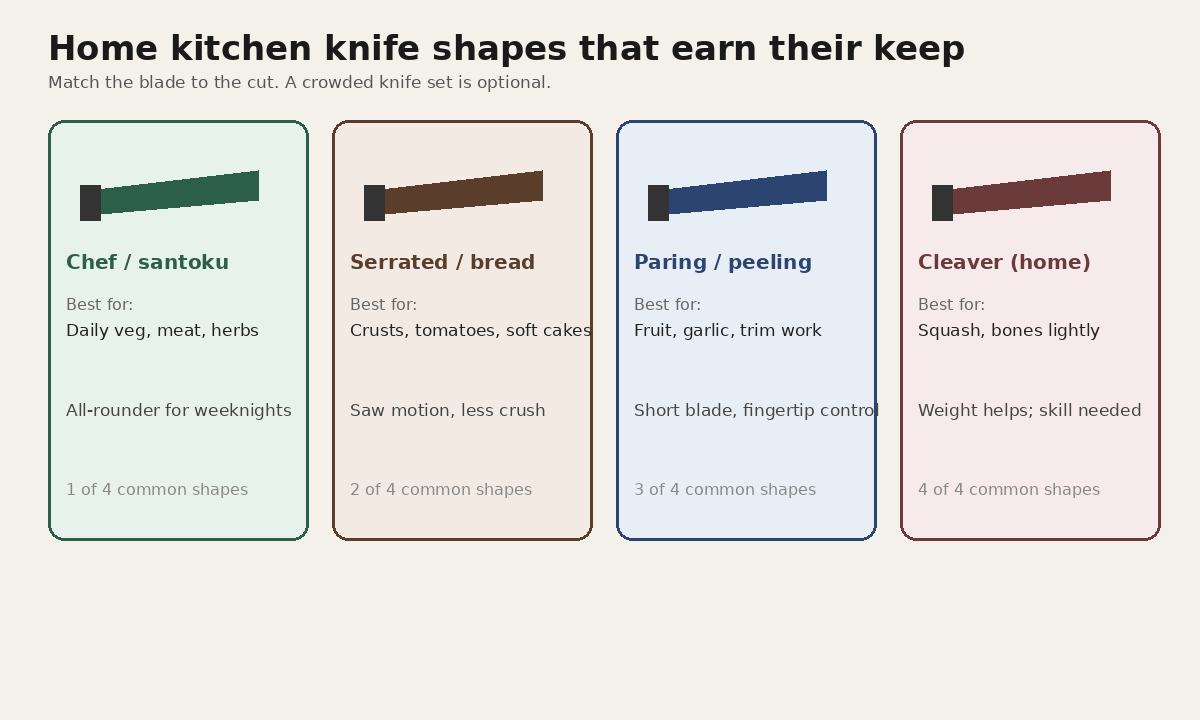
Four common shapes. Most flats lean on two or three of these daily.
When you scan a kitchen knife collection, compare handle grip, blade length, and how the tip feels for fine work, not the box count. A single reliable chef knife often outworks a crowded block that never leaves its slots. Serrated edges stay useful long after a plain edge needs attention, which is why a bread knife earns its keep even in small Singapore kitchens.
Independent kitchen writers make the same safety point in plain language: keep blades sharp and use the right shape for the job. The Serious Eats knife care guide lists common habits that dull edges and raise slip risk, from dishwasher cycles to leaving blades in a sink.
The board under the blade matters as much as the steel
Glass and hard stone boards look tidy and punish edges quickly. Wood and plastic give a little, which is kinder to the bevel and usually quieter on the ears in a small flat. Stabilize whatever you use: a damp tea towel underneath stops the board from skating toward the stove when you push through a carrot.
Food safety and edge life meet on the same surface. The USDA’s FSIS cutting board guidance still recommends separate boards for raw meat and ready-to-eat food when you can manage it, plus hot soapy washes and thorough drying. In Singapore humidity, drying is not optional. A wet board warps, smells, and invites mould along the grain.
Browsing a chopping board for daily prep is useful for comparing wood versus composite shapes and sizes that fit a tight counter. Measure the space beside your sink before you fall for a huge carving slab that never leaves the top shelf.
Hone often, sharpen sometimes
Honing and sharpening are different jobs. Honing realigns a slightly rolled edge; sharpening removes metal to rebuild a worn bevel. America’s Test Kitchen’s honing rod walkthrough keeps the advice simple: light pressure, a consistent angle, a few strokes per side, then a paper test. If the knife still tears paper after honing, it is time to sharpen or book a professional pass.
For most home cooks, a light hone before a big prep session plus sharpening a couple of times a year is enough. Pull-through gadgets are convenient and can chew metal faster than a whetstone in careful hands. Whatever method you choose, a sharp edge needs less force, and less force means fewer slips when shallots are glossy with oil.
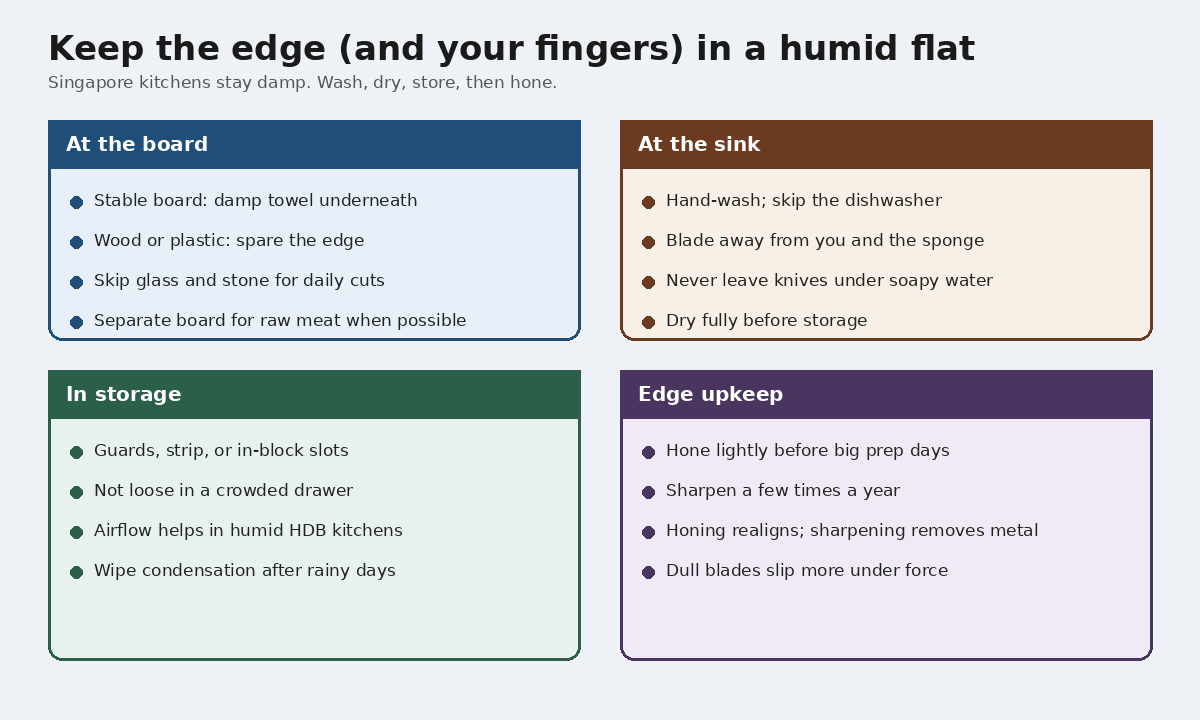
Board, sink, storage, edge. Four places Singapore humidity quietly wins if you rush.
After dinner in a humid Singapore flat
Hand-wash knives with the blade facing away from you, rinse, and dry before they sit in the dish rack. Dishwashers bang edges against racks and trap moisture in handles. Do not park a knife under bubbles in the sink; a hidden tip is how fingers meet steel by surprise.
Store blades in a block with upright slots, on a magnetic strip with clearance, or with guards in a drawer. Loose knives rattling among ladles nick each other and you. After rainy weeks, wipe condensation if knives live near an open window. A kitchen knife set Singapore cooks actually maintain is smaller than the one in the catalogue photo: two or three working blades, one stable board, and a honing rod within reach.
Good knife habits feel almost boring on purpose. Match shape to the cut, keep the board still, hone before the edge fights you, and dry everything before the night air takes over. That is enough for safer, calmer prep without turning dinner into a gear project.